
01
Impact
Absorbs impact energy before it reaches the cells and electronics. Performance for your pack is confirmed in FEA and on a sample.
Materials
Our patented, PFAS-free microcellular polyurea foam absorbs impact energy and recovers its shape, hit after hit. The numbers below are our baseline. Your part starts there and is tuned to your targets.
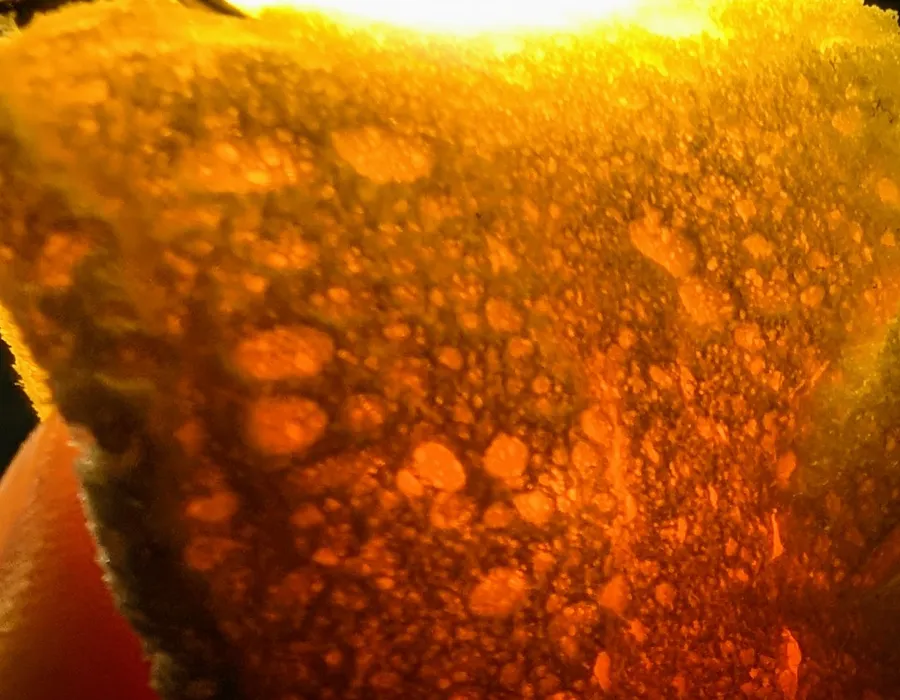
Nearly 2x a leading commercial impact foam (SDSU, 2020)
From 25 m/s projectile impact
Measured after 7 impacts
Than that same foam (SDSU, 2020); 30% stiffer in our internal comparison
Baseline, not a limit. These are baseline values for our standard formulation, the kind of numbers a conventional material supplier would give you and stop at. They are a starting point, not a limit: we change the additive loading and cast the part to your geometry, so your part’s performance is tuned to your targets and will differ from these figures.
Data sheets
A catalog data sheet describes one material that every customer buys. Yours starts from our tested baseline and is tuned to your load case: density, additives, thickness and geometry. Our engineers review every sheet before it is released to you.
Start a part and tick "Also send me a custom data sheet". Rough numbers are fine.
Our engineers tune the sheet to your load case and review it before it is released. An engineer replies within 2 business days.
It appears in your dashboard as a PDF. Anything we have not tested yet, we cover in your free FEA session.
Custom data sheets are engineering estimates until your part is simulated and tested.
Demonstration
A drone body cast in our foam takes a hit, recovers and keeps flying. Internal demonstration.
Repeated impact
Crushable foams such as EPS are designed for one impact: the first serious hit collapses the cells, and the next hit lands on material that is already compressed. In our internal testing, our foam kept its load-bearing loss under 20% across seven impacts and recovered 98% of its volume after a 25 m/s projectile impact.
For parts that take more than one hit, that means protection you do not have to replace after every event.
Impact sequence
Bars show the measured retention limit across the 7-impact test sequence (under 20% total load-bearing loss), not individual per-impact measurements.
Comparison
The properties that decide whether a protective part still works after the first hit.
71.7
kJ/m³
Energy absorbed
100
% PFAS-free
Chemistry
+30
% stiffer
Weight and stiffness
98
% recovery
Recovery after impact
US
made
Where it is made
Baseline figures for our standard formulation. Comparison foam: a leading commercial impact-protection foam used in sports and motorcycle protective gear, tested in a peer-reviewed San Diego State University study (Journal of Applied Polymer Science, 2020, doi.org/10.1002/app.48839). Other figures from our internal testing. Your part is formulated and cast to your targets, so its performance will differ.
◆Try it yourself
Two tests run in your browser, free and without an account. They use the same figures as this page, so you can watch what a density change actually does rather than read it.
One drop on a Super Foam coupon and on a comparison material of your choice, side by side. Shows how the same impact energy is spread over a longer or shorter time, and what that does to the force passed through.
A 0.723 kg weight dropped on a Super Foam cube up to seven times in a row. Set density, energy and thickness, and watch what happens to the force on each hit.
Plain-language definitions for the terms on this page. Skip it if they are already familiar.
BBattery packs
In a battery pack, one cast insert can take the place of several separate layers for cushioning and fire protection.
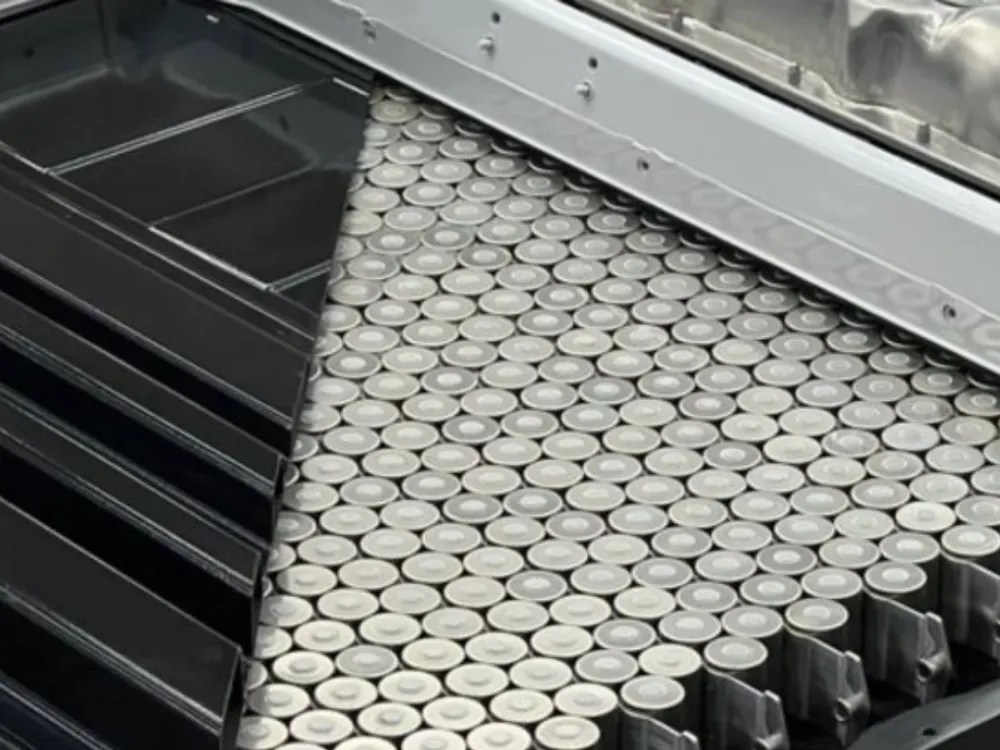
Absorbs impact energy before it reaches the cells and electronics. Performance for your pack is confirmed in FEA and on a sample.
Packs often combine potting, mica sheets and structural parts to handle impact and fire. A single cast insert can replace some of those layers, saving weight and assembly steps. Which ones depends on your design.
Direct flame does not ignite the foam in our internal testing, and electrostatic dissipative versions are available. Ratings are confirmed against the standard your pack must meet.
Formulation
The core polyurea material is covered by a granted patent. It was developed at San Diego State University, and Super Foam holds the exclusive license to commercialize it.
We make it on an automated production machine of our own design. That machine’s patent application is filed and pending.
A granted patent covers the polyurea formulation. Super Foam holds the exclusive license from San Diego State University.
No PFAS in the formulation.
Our own automated machine casts every part the same way, in the USA. Its patent application is pending.
Evaluation
Send us the load case, temperature range or pack geometry. We tell you whether our material fits, and show you the data behind the answer.