
About / Our story
Mass customization, finally built.
A master’s thesis, a patented material, a better way to mold it and a machine to make it. This is how Super Foam came together.
04Our story
An idea that waited for the right material.
Most protective foam is made one way for everyone: a fixed sheet, a fixed density, a fixed compromise. Super Foam exists because three people each saw a piece of a better answer.
-
01 · The idea
A thesis becomes a company.
In his master’s research, Zef argued for mass customization: products made to each customer’s exact need, at production scale. For years it was an argument. Super Foam is his chance to build it, starting with the protective material inside drones, robots and battery packs.
Zef Neemuchwala, CEO
-
02 · The material
A material worth customizing.
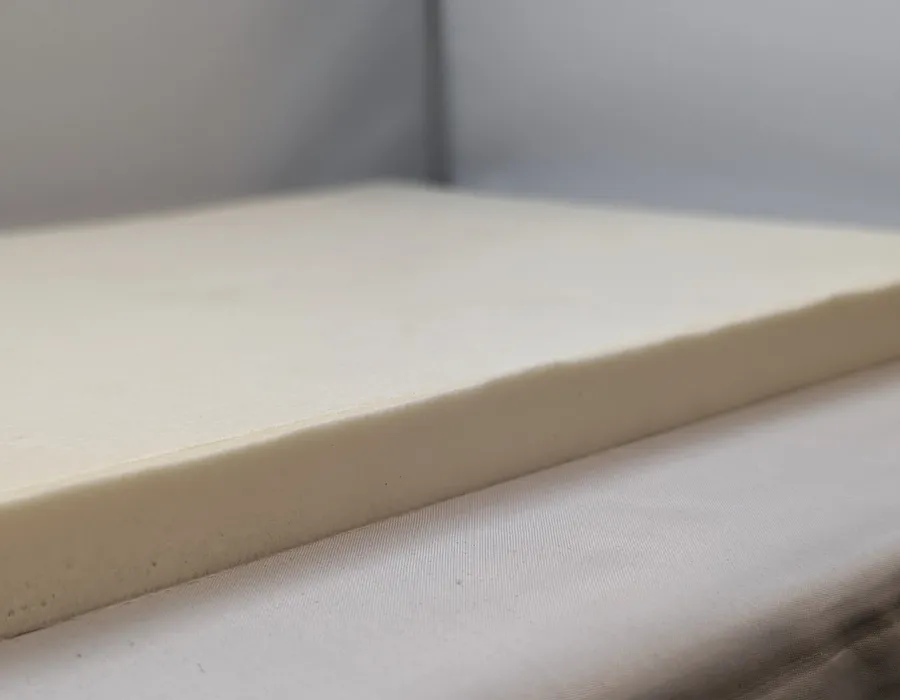
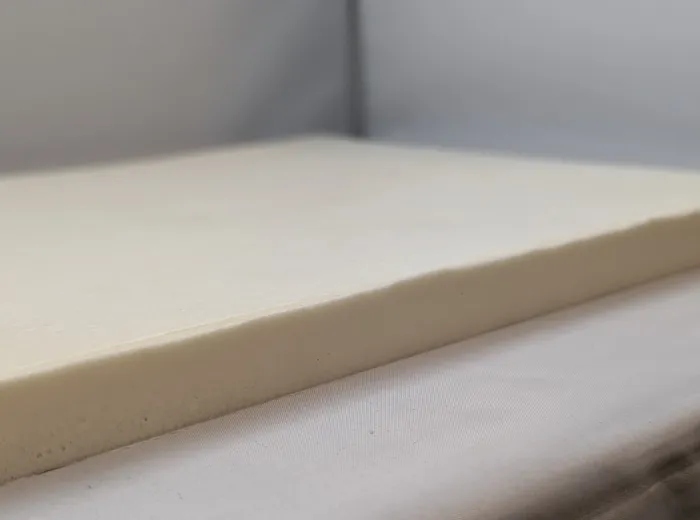
The microcellular polyurea elastomer at the heart of Super Foam was developed at San Diego State University and is covered by a granted patent. Super Foam holds the exclusive license to commercialize it. It absorbs impact energy (71.7 kJ/m³ in our internal testing) and recovers its shape after the hit.
San Diego State University
-
03 · The method
Why we pour instead of print.
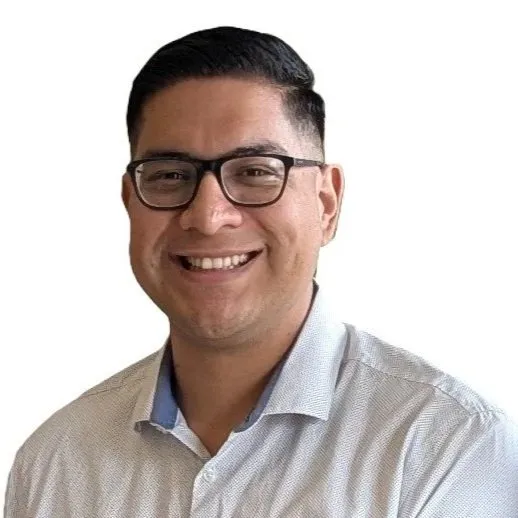
At Carbon, the 3D printing company, David saw first-hand that printed foam doesn’t hold its dimensions: the material keeps expanding as it leaves the nozzle. So we chose cold-pour overmolding. Our elastomer rises inside a closed mold, and every part comes out matching the tool.
David Hernandez, Lead Research Chemist
-
04 · The machine
A factory built by an inventor.
Jatomis invents machines. As the former CTO of KIGT Inc., he had already built automated production systems. At Super Foam he leads automation and designed the machine that makes our parts. Its patent application is pending.
Jatomis Stevenson, CTO
Put together, that’s our mission: removing the guesswork from ruggedizing autonomous hardware.
ΔThe engineering decision
Cold-pour overmolding vs. 3D-printed foam.
The research backs David’s call. When foam expands in open air, its final shape is hard to control. When it expands inside a mold, the mold sets the shape.
3D-printed foam
Expands in open air.
- Expansion you can’t predictWhen active foaming filament is printed, the foaming agent fires as it leaves the nozzle. The width of every printed line keeps changing, so exact dimensions are very hard to hold compared with a closed mold.Wang et al., 2023
- Uneven cells and surface blobsFoam that sits in the hot nozzle a fraction of a second too long (during a travel move, for example) forms merged, oversized pores. The result is uneven cell structure, blobs on the surface and parts that miss their dimensions.Wang et al., 2023
- Sensitive to every speed and temperature changeExpansion depends on nozzle pressure drop and melt temperature. Slowing down for a corner changes the local expansion, and running too hot weakens the melt so cells collapse or merge unpredictably.Nofar et al., 2022
Cold-pour overmolding
Expands inside a mold.
With cold-pour overmolding the chemical expansion happens inside a constrained mold cavity, so the outer boundary of the part matches the tooling every time, without the free-air variables that make printed foam unpredictable.
Matches the tool
Even cell structure
Repeatable
References
- Nofar, M., Utz, J., Geis, N., Altstädt, V., & Ruckdäschel, H. (2022). Foam 3D Printing of Thermoplastics: A Symbiosis of Additive Manufacturing and Foaming Technology. Advanced Science, 9. doi.org/10.1002/advs.202105701
- Wang, Z., Huang, H., Wang, Y., Zhou, M., & Zhai, W. (2023). A Review of the Preparation of Porous Fibers and Porous Parts by a Novel Micro-Extrusion Foaming Technique. Materials, 17, 172. doi.org/10.3390/ma17010172
3Leadership
The people building it.


5Advisors
Advisors, and how each one helps.
Each advisor covers a specific gap between a patented material and a company that ships parts.





+Ecosystem
Backed by a practical science ecosystem.
Programs and partners that have backed our work along the way.
Capability statement
Super Foam on one page.
Our material, process, test results and how we work with hardware teams, in a one-page PDF. Enter your email and we will send it to you.
→Our mission
Removing the guesswork from ruggedizing autonomous hardware.
Drones, robots and battery systems fail in the field because protection is still chosen by trial and error. We want hardware teams to start from a material that is tuned to the job.
The core material is covered by a granted patent, and Super Foam holds the exclusive license to commercialize it. Our automated production machine is patent pending.
Design reviews
Bring the load case.
Start with the hardware and its requirements. The team will turn them into a material spec.